


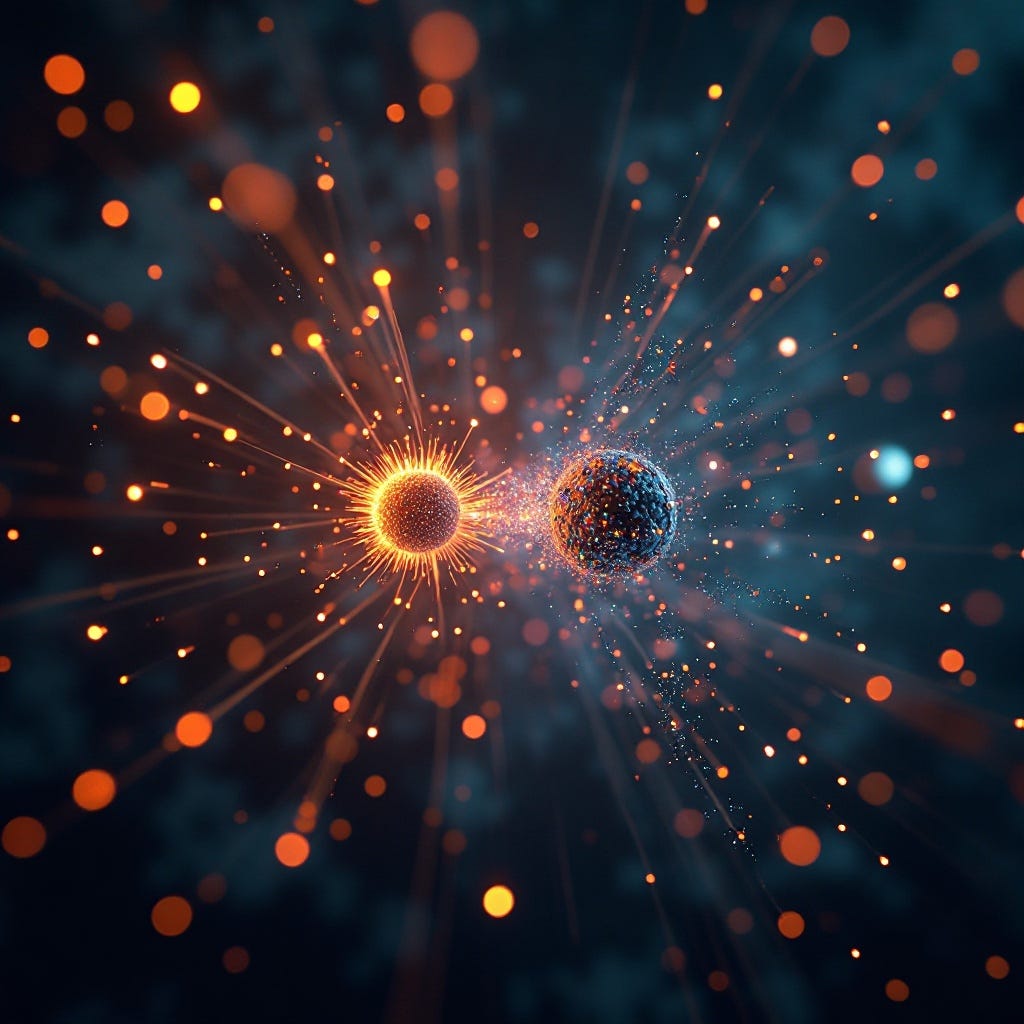
What if our understanding of physics is incomplete? Recent collider experiments suggest a particle beyond the Standard Model—could this force us to rethink reality itself
?
🔬 A Mystery in the Collider
High-energy physics experiments at CERN and Fermilab have recorded anomalies inconsistent with the Standard Model. Could these deviations indicate a new particle or a previously unknown force?
In 2025, the Muon g-2 experiment showed magnetic moment discrepancies
LHCb detected rare decay processes hinting at physics beyond the Standard Model
Statistical significance is high enough to attract global attention but not yet conclusive
If confirmed, this particle could fundamentally alter theories about dark matter, gravity, or the behavior of fundamental forces. Could this be the first tangible evidence of new physics in decades?
The potential particle may interact weakly, explaining why it’s remained hidden
It might be linked to unexplained phenomena like dark energy or neutrino mass
Verification will require additional experiments over multiple years
🛠️ The Science Behind the Signal
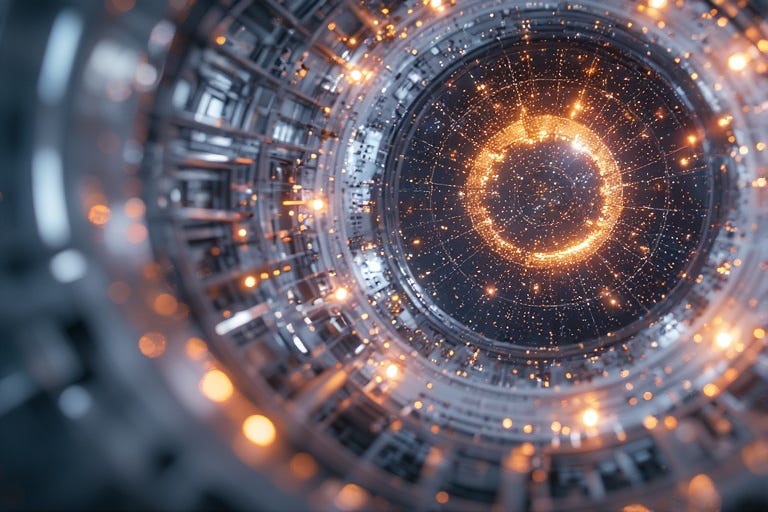
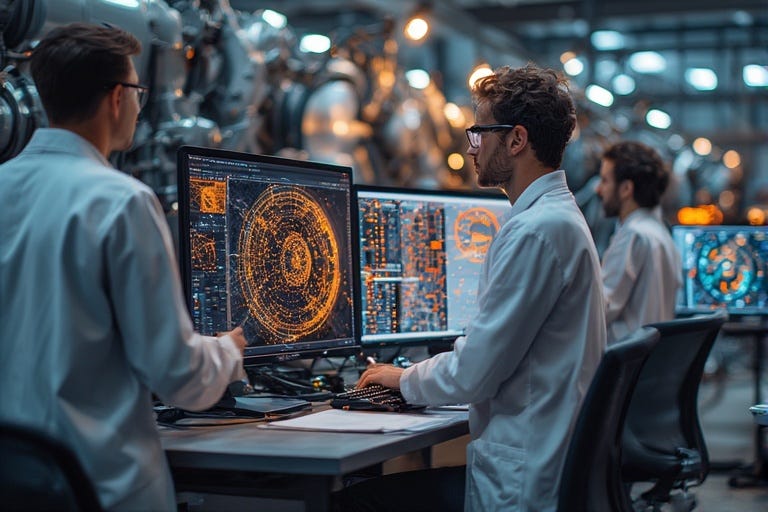
Detectors track trillions of particle collisions per second, sifting through data for anomalies. Could the observed signals be statistical flukes, experimental error, or genuine evidence of the unknown?
Advanced particle detectors capture decay paths and energy signatures
Machine learning models are used to separate noise from meaningful signals
Repeated experiments at multiple facilities aim to replicate findings
High-energy collisions recreate conditions just after the Big Bang. Could these fleeting glimpses reveal a new layer of reality hiding behind familiar particles?
The energy scale of these collisions allows rare interactions to appear
New particle signatures may require reinterpretation of conservation laws
Observations might hint at supersymmetry or extra dimensions
💡 Implications for Physics
A confirmed new particle would force a rewrite of textbooks. Could it lead to new energy sources, materials, or even insights into dark matter? The theoretical implications are staggering.
Might explain anomalies in gravitational measurements or cosmic observations
Could unify existing forces or suggest new fundamental symmetries
Offers avenues for technological innovation rooted in fundamental physics
The discovery would also reignite debates between experimentalists and theorists. Could one breakthrough reshape decades of cumulative knowledge?
Collaboration across labs worldwide will be essential for validation
Theoretical frameworks will need to adapt quickly to new data
Potential applications are long-term but transformative
🌌 The Cosmic Perspective
Every particle shapes the universe at its most fundamental level. Could this unknown particle hold the key to dark matter or the missing mass in the cosmos?
Dark matter constitutes roughly 27% of the universe, yet remains undetected
Exotic particles could account for gravitational effects we observe indirectly
Understanding new forces could illuminate cosmic evolution
If confirmed, it could also alter our understanding of energy distribution, cosmology, and even the ultimate fate of the universe. Could a single discovery rewrite the story of everything?
Could refine models of stellar evolution and black hole formation
Might suggest previously unconsidered forces shaping galactic behavior
Potentially impacts future space exploration and fundamental research
🔮 Looking Ahead
The particle hunt will continue with more sensitive detectors, upgraded accelerators, and global collaboration. Could humanity be on the cusp of discovering the next chapter of physics?
LHC upgrades in 2027–2030 will increase collision energy and data output
New experiments in neutrino detection and cosmic observation may complement collider results
Theoretical physicists are preparing multiple frameworks to interpret potential discoveries
🗣️ Reader Challenge:
If a new particle changed the laws of physics tomorrow, what would be the first experiment or application you’d attempt?
Funniest or most insightful answers get featured in the next episode.
📡 Series: The Last Frontier
🧬 A Grey Matter Daily Project
Grey Matter NetworkTM - https://linktr.ee/GreyMatterDaily
Independent, AI-supported insight across time, sport & science.
📘 Grey Matter Daily
🔗
🏏 Grey Matter Sports
🔗

📸 Instagram
🔗 https://instagram.com/Grey_Matter_daily
X - @GreyMatterDaily
Substack’s payment system runs on Stripe, which isn’t available in my region. That means I can’t turn on paid subscriptions here… but the work continues. Support Grey Matter Daily on Patreon → https://patreon.com/GreyMatterNetwork


