


🧬 The Quest for Biological Immortality
Could humans live 200 years or more, maintaining health and vitality throughout? It once seemed a distant dream, yet advances in genetics, regenerative medicine, and cellular biology suggest we may be approaching a turning point.
Extending lifespan is no longer just about adding years but expanding the years we live without chronic illness, often called the healthspan. But how close is science really to rewinding or halting the biological clock? The question remains open, with early signs promising but challenges significant.
Extending healthspan means focusing on quality of life, not just longevity
Early interventions show promise but full biological immortality remains unproven
🧪 Genetic Repair: Fixing Our DNA
Our DNA carries the blueprint for life, but it is vulnerable to damage over time from environmental stress, replication errors, and chemical changes. This damage accumulates, leading to cellular aging, dysfunction, and disease.
Could precise gene editing techniques like CRISPR be the key to repairing this damage? Studies in mice have shown that correcting certain genetic mutations can extend lifespan by nearly a third. For example, a 2020 Nature study demonstrated CRISPR’s potential to fix DNA errors linked to aging, improving both lifespan and tissue function.
Research also suggests that activating telomerase, an enzyme that preserves chromosome ends, might delay aging markers in human cells. Still, moving these promising results into safe, reliable human therapies presents complex hurdles. Is it possible we will soon master genetic repair to reset our biological clock?
CRISPR-edited mice lived up to 30% longer by fixing age-related mutations
Telomerase activation might delay cellular aging but carries cancer risk concerns
Translating gene repair safely to humans is still a major scientific challenge
🧫 Cellular Reprogramming: Turning Back Time
Cells carry molecular signals of their age, determining how well they can repair and regenerate. The discovery of Yamanaka factors revealed a method to partially rewind cells to a more youthful state, without losing their specialized functions.
Experiments in mice showed that applying these factors can extend lifespan and reduce symptoms of age-related diseases. Senolytic drugs, which target and eliminate senescent or “zombie” cells that no longer divide but cause inflammation, have shown promise in early human trials by improving physical function and cognition.
Yet, we must ask: can these techniques be safely scaled to rejuvenate whole human organs or even entire bodies? The science moves fast, but the gap between theory and practical human application remains.
Partial cellular reprogramming extended mouse lifespans in lab studies
Senolytics cleared aging cells, improving function in early human trials
Large-scale rejuvenation of human tissues remains uncertain but promising
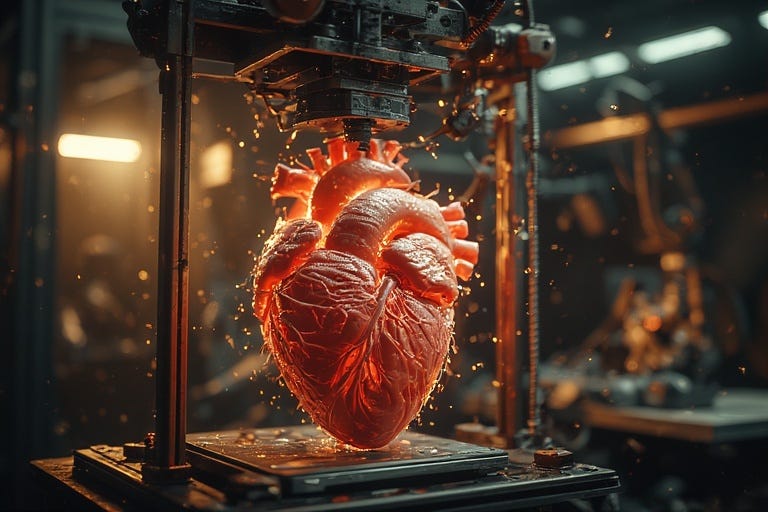
🖨️ Organ Printing: Building Replacement Parts
3D bioprinting offers an innovative route to replace worn or damaged organs. By layering living cells with precision, researchers have created liver tissue that can survive and function for months in animal models.
Progress in printing kidney and heart tissues is rapid, with clinical trials for transplantable parts potentially on the horizon within the next decade. Personalized organs printed from a patient’s own cells could eliminate the need for immunosuppressants and the risks of rejection.
Could this technology one day allow the human body to renew itself indefinitely by replacing failing parts on demand? The potential is immense, but challenges in complexity, vascularization, and long-term function remain to be overcome.
Bioprinted liver tissues survived and functioned for months in animal tests
Kidney and heart tissue printing are advancing toward clinical trials
Personalized organs could reduce rejection risk and improve longevity
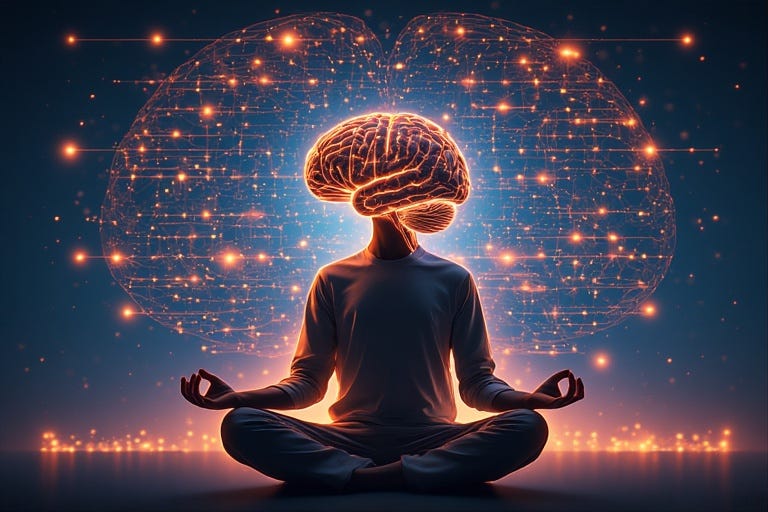
🧠 Mind and Memory: The Ultimate Challenge
Extending life biologically raises fundamental questions about the brain. How do we preserve memory, identity, and consciousness over centuries?
Research shows that adult human brains retain some ability to generate new neurons, a process called neurogenesis. Brain-computer interfaces have restored communication in patients unable to move or speak, demonstrating the brain’s plasticity and resilience.
But can these technologies maintain cognitive function and personality as the body ages? Might future breakthroughs require merging biological longevity with digital or synthetic augmentation to sustain the mind itself? The intersection of neuroscience and technology is likely to play a critical role in true human immortality.
Adult brains continue limited neuron growth well into old age
Brain-computer interfaces restored speech in locked-in patients
Long-term cognitive preservation may require hybrid biological-digital solutions

🌍 Ethical and Societal Implications
The possibility of dramatically extended lifespans invites difficult ethical and social questions. Who will have access to longevity treatments, and could they exacerbate existing inequalities?
How will longer lives affect resources such as food, water, and energy? What changes will be needed in social structures, retirement, and family dynamics? Beyond practical concerns, there are deep philosophical questions about identity and the meaning of life when human existence is prolonged far beyond current limits.
Society must confront these issues alongside scientific advancements.
Access inequality risks widening social and economic gaps
Longer lives will reshape family, work, and resource dynamics
Philosophical questions about identity and meaning will intensify
🔮 Looking Ahead
Senolytic drugs and gene therapies are advancing into clinical testing. Bioprinted organs are progressing steadily towards medical use.
Yet profound scientific, ethical, and logistical challenges remain before living 200 years or more becomes a reality. Is humanity prepared to face this transformation? The journey ahead may redefine what it means to be human.
🗣️ Reader Challenge:
If you could live 200 years, what would you want to achieve or experience?
Funniest or most insightful answers get featured in the next episode.
📡 Series: The Last Frontier
🧬 A Grey Matter Daily Project
Grey Matter NetworkTM - https://linktr.ee/GreyMatterDaily
Independent, AI-supported insight across time, sport & science.
📘 Grey Matter Daily
🔗
🏏 Grey Matter Sports
🔗

📸 Instagram
🔗 https://instagram.com/Grey_Matter_daily
X - @GreyMatterDaily
Substack’s payment system runs on Stripe, which isn’t available in my region. That means I can’t turn on paid subscriptions here… but the work continues. Support Grey Matter Daily on Patreon → https://patreon.com/GreyMatterNetwork


